Black Skin Disease — also called Alopecia X — is one of the most distressing skin conditions a dog can develop. Here’s what it actually is, why the skin darkens, and what can and can’t be done about it.
What is Black Skin Disease?
The word alopecia is nothing more mysterious than the medical term for hair loss — Latin via Greek alopekia, meaning fox mange. The condition known as Alopecia X or Black Skin Disease is far less well understood than the name suggests. The “X” exists precisely because the cause is unclear.
Here is the part that most pages about this condition get wrong, and it matters for everything that follows:
Alopecia X is a hair cycle arrest, not an infection. The follicles stall in their resting phases and fail to re-enter growth. It is non-inflammatory and, in itself, non-itchy. The research into why points to hair-cycle regulation and genetics — no infectious agent has ever been shown to cause it.
Darkening is secondary hyperpigmentation associated with the affected hairless skin — not something living under it. It is the same darkening seen in other endocrine-pattern hair loss. Two things support this: the pigment fades as coat returns, and it is absent in white-coated poodles with the condition — no organism selectively spares white dogs.
The condition is also easily confused with Cushing’s Disease — a different, hormonal condition that needs veterinary blood work to diagnose. If you’re not sure, ask your vet to rule Cushing’s out first. There is no test that confirms Alopecia X; it is a diagnosis of exclusion.
How it progresses
The condition tends to move through recognisable stages:
- A dull, woolly-looking coat as the guard hairs are lost first
- Thinning, then bald patches — characteristically symmetrical, over the trunk, sparing the head and lower legs
- Darkened or grey skin in the bald areas
- Extensive hair loss with deep grey skin over much of the body
Early on these dogs usually aren’t itchy at all, which is why the condition is so often missed or dismissed. If that’s where you are, start with what non-itchy hair loss actually means — it walks through everything a vet should rule out before anyone settles on Alopecia X.
If itching or an odour does develop later, that is a secondary infection on exposed skin, not the condition itself progressing — and it is the part that responds well to treatment.
Pomeranians are over-represented in the affected population — but Chow Chows, Keeshonds, Samoyeds, Alaskan Malamutes, Miniature Poodles and other Nordic breeds are also at higher risk. The susceptibility appears to be genetic.
Where the disease shows up
Black Skin Disease doesn’t always start where you’d expect. Common locations:
- The belly and inside of the back legs — often the first sign, with overall itchiness and small skin eruptions
- Around the genitals and teats — a very early stage shows small black or rusty dots peppering the skin
- Symmetric bald patches on the flanks, back, or tail — classic mid-stage Alopecia X
Those early rusty specks are worth attention. Rust-coloured staining is a sign of secondary yeast or bacterial overgrowth taking hold on skin that has lost its protection — a complication rather than the cause, but one that will not clear up on its own and is the thing most likely to be making your dog uncomfortable.
Why steroids make it worse
When a vet sees an uncomfortable dog, the standard first move is often cortisone or prednisone. Dermagic never recommends this for Alopecia X — and the reason is more direct than you might expect.
Alopecia X is non-inflammatory and non-itchy. There is nothing for a steroid to suppress. Meanwhile glucocorticoids actively inhibit hair growth: chronic exposure suppresses follicular activity and produces follicular atrophy, thin skin, comedones and bilaterally symmetrical hair loss over the trunk.
Read that list again — it is a description of Alopecia X. Steroids produce the very pattern of hair loss being treated, which is exactly why steroid-induced Cushing’s is one of the conditions a vet has to exclude before settling on this diagnosis.
If your dog has become itchy, that’s the secondary infection talking, and it needs treating as an infection rather than masking with something that will stall the follicles further. The wider trade-off is covered in why we avoid steroids for pet skin conditions.
What can actually be done
Let’s be straight about this, because it’s where most pages overpromise.
Nothing reliably restarts the hair cycle. The drug options — melatonin, trilostane, deslorelin, mitotane — are variously unproven, off-label, or carry side effects that are hard to justify for a condition specialists class as cosmetic. High-quality controlled evidence for Alopecia X treatment is extremely limited, which means every uncontrolled before-and-after photograph on the internet, ours included, is confounded by the fact that coat status in this condition fluctuates on its own.
We’ve gone through every option properly — what each one’s actual response rate is, and where the numbers come from — in Alopecia X treatment: what works, what doesn’t, and why. If you’re deciding between routes, read that one.
What is squarely treatable is the skin. A dog with Alopecia X has lost its coat’s protection, and that exposed skin is vulnerable to secondary bacterial and yeast overgrowth and to seborrhoea. When those develop they are what makes the dog itchy and malodorous — and clearing them needs no systemic drugs, no anaesthesia and no monitoring.
That’s what the routine below is for. It looks after exposed skin and helps manage skin prone to secondary bacterial and yeast overgrowth. It is not a cure for the hair cycle arrest, and we’re not going to tell you it is.
Step 1 — Bathe properly
Use the Peppermint and Tea Tree Oil Shampoo followed by the conditioner. The award-winning Skin Rescue Shampoo Bar is an excellent solid alternative — formulated specifically for skin problems, economical, and easy to use.
Bathe weekly for the first month, then twice monthly or as needed. Do not over-bathe — that strips the skin’s natural protective oils.
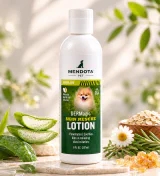
Step 2 — Skin Rescue Lotion (the critical step)
This is what does the work. Trim the hair over and around the affected areas short — do not shave — to make application easier. Then massage the lotion deeply into the affected skin twice daily for a week, then once every day after that.
Use it like hand lotion: not too much, not too little. The skin should not appear greasy or wet. The lotion works on the skin surface and in the follicle openings, clearing the yeast and bacterial overgrowth that establishes itself once skin has lost its coat.
On shaving: the common claim that clipping “introduces fungus under the skin” isn’t right, but the advice to avoid it stands for better reasons. Clipping a plush-coated breed can leave the coat very slow to return — post-clipping alopecia — and in a predisposed dog it may unmask Alopecia X. The follicles aren’t destroyed and coat normally returns, but it can take twelve to twenty-four months. Clip short if you must; don’t shave. The whole question is worked through in should you shave a double-coated dog.
Keep a soft t-shirt on the dog. It protects the area, keeps the lotion on the skin, and stops them licking it off (though licking it isn’t harmful — it just works better when it stays put).
Step 3 — What to expect, realistically
Within the first few weeks, the changes owners usually report are in the skin rather than the coat: less irritation, less odour, less greasiness, and the rust-coloured staining fading. That’s the secondary overgrowth clearing, and it’s the part that’s genuinely within reach.
Coat is a different matter and needs an honest answer. Some dogs regrow substantially, some partially, some not at all — and that’s true of every treatment for this condition, including the pharmaceutical ones, which relapse frequently. Where coat does return it usually starts as fine undercoat before longer guard hairs follow, and the darkened skin fades as the hair comes back rather than flaking off.
Anyone quoting you a percentage for regrowth on a topical routine is inventing it. There’s no trial to cite.
Be patient and persistent. This is a months-long process, not a week-long one.
Step 4 — Cell Restoration Crème for the barrier
Once the skin is clear and settled, switch the treated areas to the Cell Restoration Crème — an organic aloe-based crème that supports the barrier and stops exposed skin from drying out. This is the long-term step: skin without a coat over it stays vulnerable for as long as it stays bald, so barrier care isn’t something you stop once things look better.
For any spot that breaks open or stays inflamed, the Hot Spot Salve is the right tool. It’s the same active ingredients as the Skin Rescue Lotion in a concentrated, sticky form designed to dab on and stay put. One application is usually enough.
The system in one bundle
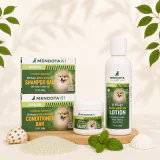
The Dermagic System combines all four products in a single bundle. For a dog with extensive Black Skin Disease this is the right starting point — the four steps do different jobs and they work together, so running one in isolation is where most disappointing results come from.
 Start the treatment
DERMagic Skin Essentials System
The full four-step System — dermagic.eu →
Start the treatment
DERMagic Skin Essentials System
The full four-step System — dermagic.eu →What recovery has looked like
Real cases — including Gunner, Sir Winston, Yogi and Gus — are documented elsewhere on this journal, with the owners’ own photographs and timelines.
We’d ask you to read them for what they are: individual dogs whose owners looked after their skin properly and were pleased with what happened. They are not controlled evidence, and because coat status in Alopecia X varies on its own, no uncontrolled set of before-and-after photographs can prove a treatment caused the change. We think the cases are worth showing. We’re not going to dress them up as something they aren’t.
The full protocol, with dosing and a realistic recovery timeline, is set out in the Dermagic System guide. If your dog is a Pomeranian — by far the most commonly affected breed — see the dedicated guide to Pomeranian alopecia and natural treatment, or why is my Pomeranian losing hair? if you aren’t yet certain Alopecia X is what you’re dealing with.
 Start the treatment
DERMagic Skin Rescue Lotion
Start treatment — dermagic.eu →
Start the treatment
DERMagic Skin Rescue Lotion
Start treatment — dermagic.eu →For specific guidance on your dog’s case, email customerservice@dermagic.eu or call +44 7425 388643.