
Flea allergy dermatitis explained from the primary literature — why the reaction is out of proportion to the flea burden, what the UK prevalence figures actually are, and what we sell that helps.

Topic
Flea allergy dermatitis explained from the primary literature — why the reaction is out of proportion to the flea burden, what the UK prevalence figures actually are, and what we sell that helps.

The Westie's reputation for skin trouble is one of the few breed reputations the evidence actually supports. But its most famous disease — armadillo Westie syndrome — probably isn't a separate disease at all. What the research shows, and what it means for your dog.
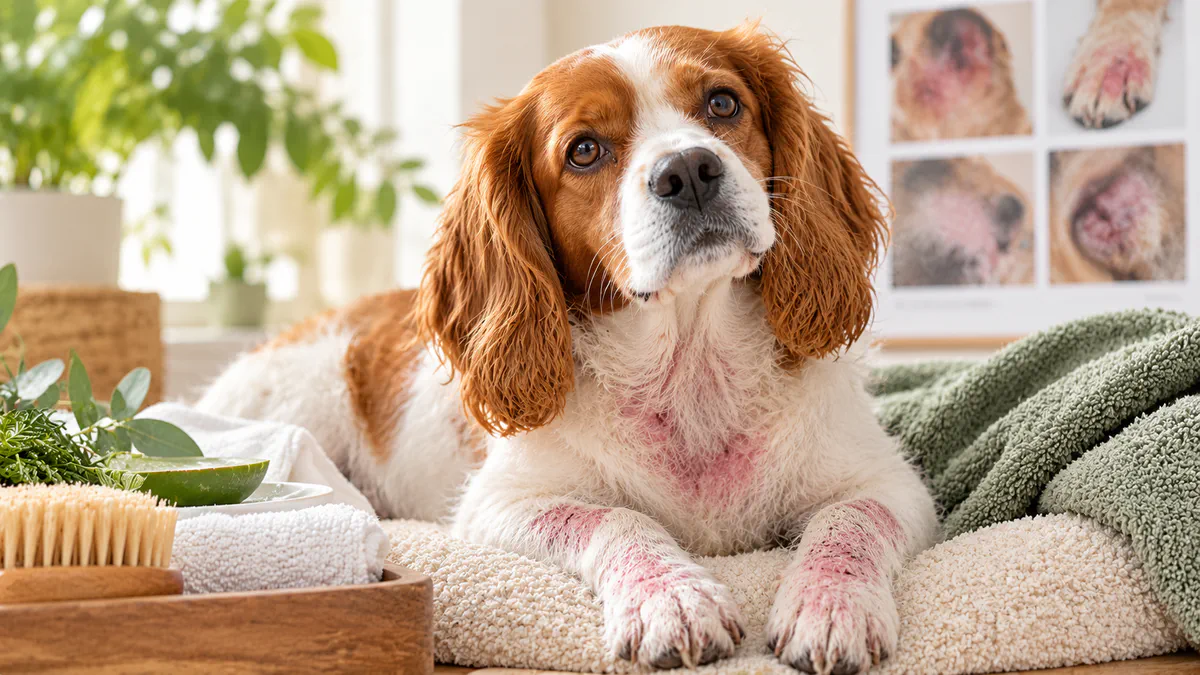
What the evidence actually says about Golden Retriever skin: ears are the breed's strongest measured risk, the breed has its own genetic scaling disease, and the wheat-allergy story is wrong.
The Labrador's defining skin problem is its ears — and ear disease in this breed is an allergy problem wearing a water-dog disguise. What the evidence actually shows about Labrador ears, allergies, hot spots and coat, including the chocolate-colour finding and the one skin disease that is genuinely specific to the breed.
Most itch guides give you a list of causes. This one gives you a map. Where your dog scratches narrows the cause faster than any symptom list — plus the tests that do not work, the home remedies that fail, and what genuinely helps.
German Shepherds carry an inherited skin-barrier weakness, and it drives almost everything that goes wrong with their skin — allergies, ears, deep pyoderma and hot spots. What each problem looks like, what needs a vet, and how to build a routine that holds.
Why French Bulldogs get more skin trouble than almost any other breed — folds, tail pockets, allergies, ears and blue-coat hair loss — and how to treat each one naturally.

Autumn brings new allergens, shorter walks, colder weather and toxic temptations for dogs. A practical seasonal care guide for owners.
Malassezia yeast overgrowth is one of the most under-recognised causes of itching in dogs — and it usually sits on top of an allergy rather than instead of one.
Grass pollen allergy in dogs causes skin reactions rather than sneezes. Here's how to spot it, how to test for it, and how to manage it.
Atopy and allergy aren't the same thing. Here's the genetics, the breeds at risk, the seasonality pattern, and how to support an atopic dog.
Spring brings pollens, hot spots and seasonal itching. Here's how to spot it early and bring fast relief with natural products.