In most dogs, recurring ear trouble is an allergy problem showing up in the ears. The English Cocker Spaniel is the breed where that rule breaks. Allergy is unusually rare in the breed, ear disease is common, and the reason starts inside the ear canal.
This is our seventh breed guide. In the last few we have made one argument repeatedly: ear disease in dogs is mostly allergic skin disease presenting in the ear canal, and ear shape, swimming and moisture matter much less than people think. The Labrador’s “swimmer’s ears” turned out to be allergy. The Westie, a prick-eared terrier that rarely swims, gets ear disease at almost exactly the same rate.
The Cocker Spaniel does not fit that pattern, and we would be doing you a disservice if we pretended it did.
The English Cocker has some of the lowest recorded odds of allergic skin disease of any breed we have looked at, and some of the highest odds of ear disease. Something else is going on in the Cocker ear, and understanding it changes what you should do as an owner, especially if your Cocker is young.
The short answer
- Ears are the breed’s defining problem. Ear inflammation is the English Cocker’s second most common disorder in UK general practice, at 10.09% a year, and ear discharge is around fifteen times more likely to be recorded than in other dogs.
- In the English Cocker, it is probably not allergy. The breed has unusually low odds of atopic dermatitis, and researchers concluded allergy is not the main driver of its ear disease.
- The ear canal itself changes. Cockers tend to develop enlarged wax glands in the canal, sometimes before any disease appears, and this is why their ear disease so often becomes chronic.
- Early ear trouble is a warning sign. Ear disease before one year of age nearly quadruples the odds of severe, end-stage disease. A young Cocker with ear problems should be examined properly and early.
- Lip folds are the breed’s other real skin problem, at nearly eight times the odds of other dogs.
- “Seborrhoeic Cocker” is a fading diagnosis. Most of those dogs would now be described differently, and need a proper work-up.
- Some popular claims are wrong: that Cockers are an “allergy breed”, that they are allergic to chicken, and that daily ear cleaning prevents infection.
Part one: two Cockers, two different pictures
Before anything else, it helps to know which Cocker you have, because the research treats them as different breeds and the findings differ.
- The English Cocker Spaniel is the more common breed across the UK and most of Europe. Most of the modern, large-scale data comes from UK veterinary records and is about this dog.
- The American Cocker Spaniel is smaller, with a shorter muzzle, a domed head and a much heavier coat. Much of the older research, particularly the American studies from the 1980s and 1990s, was almost certainly about this dog, because that is what “Cocker Spaniel” meant in the United States.
Where we can tell which breed a study used, we say so. The differences are not small. In Finnish clinic records, 27.0% of American Cockers had ear disease, against 15.7% of English Cockers. American Cockers needed ear surgery more often, and as you will see, their odds of an underactive thyroid look higher too.
Part two: the ears, by the numbers
Ear disease is not just common in Cocker Spaniels. It is one of the most consistently measured breed problems in veterinary records.
In UK general practice, a 2023 study of 2,318 English Cocker Spaniels found that otitis externa, inflammation of the outer ear canal, affected 10.09% of dogs in a single year. It was the second most common disorder of any kind, behind only dental disease at 20.97%.
Compared with other dogs, a 2024 study of 2,510 English Cockers against 7,813 dogs of other breeds found:
- ear discharge recorded with an odds ratio of 14.66, around fifteen times more likely
- otitis externa with an odds ratio of 1.40
- ear disorders as a group with an odds ratio of 1.75
Across breeds, a 2021 study of 22,333 dogs found the Cocker Spaniel had an odds ratio of 1.67 for otitis externa compared with crossbreeds. Dogs with pendulous ears had higher odds (1.76) than dogs with upright ears. That is a genuine finding, and it means ear shape is a real risk factor.
What it does not do is prove the explanation everyone gives for it.
Part three: why it happens, and why “floppy ears trap moisture” is only half right
The traditional explanation is that long, heavy ears trap warmth and moisture in the canal, creating an environment where bacteria and yeast thrive. You will find it on almost every page about Cocker ears.
Ear shape is a measured risk factor. The moisture mechanism is not. The large UK study that found the pendulous-ear association repeated the moisture explanation by citing a paper from 1987. It did not measure moisture. As far as we can find, nobody has shown that Cocker ear canals are wetter, or that wetness is what drives the disease.
What has been measured is more interesting, and more useful.
The canal changes from the inside
In a US study of 80 dogs that needed total ear canal ablation, the surgery to remove a canal destroyed by chronic disease, 48 were Cocker Spaniels. That is 60% of the dogs needing the most drastic ear surgery there is, from a single breed.
The tissue told the researchers why. In most breeds, end-stage ear disease is dominated by fibrosis, scarring of the canal. In the Cockers, 72.9% showed a different pattern, dominated by enlargement and overgrowth of the ceruminous glands, the glands that produce ear wax. In other breeds that pattern was seen in 28.1%. The authors urged “earlier and more aggressive management” of ear disease in the breed.
A 2021 study of 28 American Cocker Spaniels took this further. Gland enlargement was found in 6 of 13 ears that had no clinical disease at all. The change was not linked to allergy. It may come before the disease rather than after it, and that is one reason researchers suspect a genetic component, although a genetic study in the same group did not find a significant gene.
An older and much smaller study found that breeds prone to ear disease have more of these glands even in healthy ears. It also found hair in the ear canals of every breed examined, which matters when we get to plucking.
What this means: in many Cockers the ear canal is predisposed to produce more wax and to thicken. Once inflammation starts, that canal is more likely to narrow, fill and become chronically diseased. It is a structural tendency, and it explains why Cocker ears so often become a lifelong problem.
Part four: the breed that breaks our own rule
We have argued in several guides that canine ear disease is mostly allergy. For the Labrador and the Westie, the evidence supports that strongly. The English Cocker is different, and the numbers are striking.
In the same 2024 UK study of 2,510 English Cockers:
- atopic dermatitis had an odds ratio of 0.14, recorded in only 0.20% of dogs
- allergy in general had an odds ratio of 0.14
- skin disorders as a group had an odds ratio of 0.70
- pododermatitis, inflamed feet and a classic sign of allergy, had an odds ratio of 0.35
In other words, the English Cocker is much less likely than the average dog to be diagnosed with allergic skin disease, and much more likely to have ear disease. The researchers stated that their data does not suggest that allergic skin disease is a main trigger for otitis externa in the breed.
This also explains a finding from Finland. In a survey of 8,643 dogs, Cocker Spaniels ranked only 27th for owner-reported allergic skin symptoms, despite appearing on older lists of allergy-prone breeds. (That paper gives a rank, not a percentage, so we do not quote one.)
Two honest qualifications. First, the researchers noted that allergy may be under-diagnosed in dogs whose only sign is ear disease, so an allergic Cocker can easily be missed. Second, the Finnish ear study did find allergy in some affected dogs. So the right conclusion is not “Cocker ear disease is never allergy”. It is that in this breed, the ear canal itself is a major part of the problem, and treating the ears as purely an allergy symptom will miss it.
Part five: the young Cocker with ear trouble
If you take one thing from this guide, make it this.
In the Finnish study of Cocker Spaniels, dogs whose ear disease began before one year of age had nearly four times the odds (odds ratio 3.8) of going on to severe, end-stage disease. The confidence interval was wide, so the exact figure is uncertain, but the direction is clear. Of the affected American Cockers in that study, 9.0% eventually needed ear surgery.
The same study found something just as important: owner ear-care habits made no measurable difference to the risk. Neither did diet. Almost half of the affected dogs, 47%, had no skin problems elsewhere.
So the lesson is not “clean harder”. It is this:
- Take early ear problems seriously. A puppy or young Cocker with recurring ear trouble is not just having a run of bad luck.
- Get a proper examination, including a look down the canal and, if the vet thinks it useful, cytology to identify what is growing.
- Ask about referral early. A veterinary dermatologist can assess the canal before the changes become irreversible. That conversation is far more valuable at one year old than after three years of repeated flare-ups.
- Finish every course of treatment, and go back for the recheck. Cocker ear disease that is only partly treated is how canals become permanently narrowed.
Our dog ear care guide covers technique, what to look for and what should never go into an ear.
Part six: everyday ear care that makes sense
Here is what we think is sensible for a Cocker owner, and where the evidence stops.
Look at the ears regularly. Once a week, lift the flap and look. A healthy ear is pale pink, with little wax and no odour. Redness, swelling, dark or excess wax, discharge, odour, head shaking or scratching are reasons to see a vet.
Clean when the ear needs it, not on a schedule. No trial has shown that routine cleaning prevents ear disease in a healthy ear, and the Finnish Cocker study found owner ear care made no difference to risk. Cleaning a visibly waxy ear with a gentle, alcohol-free cleaner is reasonable care. Daily cleaning of a healthy ear is not necessary.
Never put anything into a painful or discharging ear before a vet has examined it and checked the eardrum.
Don’t pluck healthy ears. Hair is present in the ear canals of all breeds, including those that rarely get ear disease. Plucking can inflame the canal. If your vet or groomer suggests trimming hair around the ear opening for an individual dog, that is a reasonable judgement. Routine plucking is not supported by evidence.
Drying after swimming or bathing is harmless and sensible. Just don’t mistake it for the thing that matters most.
 Keep the ears clean
DERMagic Natural Ear Wash
View on dermagic.eu →
To be clear about what an ear cleaner does: it cleans wax and debris from the outer ear. It does not treat or prevent ear infections, and no cleaner of any brand has been shown to prevent ear disease. An ear that is already inflamed needs a vet.
Part seven: lip folds, the breed’s other real skin problem
The second genuinely Cocker-specific skin problem is in a place many owners do not think to look.
Lip fold dermatitis is inflammation in the fold of skin on the lower lip, where saliva and food collect and stay moist. In UK records covering 905,553 dogs, the English Cocker Spaniel had an odds ratio of 7.72 for skin fold dermatitis, nearly eight times the odds of other dogs, with 1.34% affected in a year, against 0.37% of dogs overall. In English Cockers the lips were the affected site in 92.9% of cases. English Cockers alone accounted for 13% of all skin fold dermatitis cases in the study.
The usual sign is a persistent odour from the mouth that is not coming from the teeth, along with redness, moisture and sometimes discolouration in the fold. Many owners assume it is bad breath. Because dental disease is also the breed’s most common disorder, it is worth checking both.
What helps: keeping the fold clean and dry. After meals, gently wipe the fold with a soft damp cloth and pat it dry. If the fold is red, sore or weeping, see your vet, because infected folds need proper treatment, and in severe recurring cases a vet may discuss a small surgical correction.
Our guide to why your dog smells covers how to tell the different sources of odour apart.
Part eight: the “seborrhoeic Cocker”, and why that diagnosis is fading
Older books and websites describe Cocker Spaniels as the classic breed for primary idiopathic seborrhoea: a greasy, scaly, smelly coat caused by an inherited fault in how the skin renews itself.
The evidence for that is thinner than it sounds. It comes largely from small laboratory studies from 1989 to 1992. One of the best known compared 8 seborrhoeic Cockers with 4 healthy Cockers and found that skin cells renewed far faster in the affected dogs. That is a real finding, but a tiny one, and it shows that the skin was behaving differently, not why.
A 2013 veterinary review went further. It described the skin changes as an adaptive response, argued that the term “primary idiopathic seborrhoea” should be eliminated, and said that most Cocker cases would now be described as vitamin A-responsive dermatosis.
That is a familiar pattern. We saw the same thing with the Westie’s “armadillo syndrome”: a famous breed-specific disease that, on closer inspection, turns out to be something else.
Vitamin A-responsive dermatosis
Vitamin A-responsive dermatosis is described in veterinary reviews as most commonly seen in adult Cocker Spaniels. It produces scaly, crusted plaques, especially on the chest and belly, and a dull, greasy coat. It is genuinely rare. The original 1983 report described just three dogs that responded to vitamin A supplementation, out of ten with similar signs.
There is one published treatment finding worth knowing. In a 1992 open-label study, a synthetic retinoid, a drug related to vitamin A, improved Cocker Spaniels with seborrhoea but did not help Basset Hounds or West Highland White Terriers. That is one more reason to think the Cocker form is a distinct condition rather than generic greasy skin.
Two important cautions. Vitamin A dosing is a veterinary decision, never a home supplement, because too much vitamin A is toxic. And a Cocker with a greasy, scaly coat may well not have this condition at all. Yeast overgrowth, allergy, hypothyroidism and other problems look very similar, and need ruling out first.
“Cockers have more oil glands”
This is commonly repeated and, as far as the skin goes, unsupported. The same small 1989 study found that oil-gland cells in healthy Cocker skin were renewing more slowly than in Beagles, not faster. The ear is a separate matter: the evidence on enlarged wax glands in the canal is real. The idea of an oily breed whose skin overproduces sebum is not.
Our seborrhoea guide covers greasy, flaky coats in more depth, including the conditions that are genuinely primary.
Part nine: yeast
Malassezia is a yeast that lives normally on dog skin and in ears, and overgrows when skin is inflamed or greasy. Cocker Spaniels are consistently over-represented in referral case series: a 1996 UK series of 40 dogs found Cockers significantly over-represented, and a 1997 US study of 86 cases found the American Cocker Spaniel at increased risk.
Those are caseload studies from referral clinics, not population odds ratios, so we will not put a number on it. But the pattern fits everything else in this guide. A canal that produces more wax, and lip folds that stay moist, give yeast more room to overgrow.
Yeast overgrowth is a veterinary diagnosis, made by looking at a sample under a microscope, and it sits on top of an underlying cause. Our guide to the signs of yeast in dogs explains what to look for.
Part ten: the problems that are for your vet, not for skincare
Some Cocker Spaniel problems show up in the skin, coat or eyes but have nothing to do with topical care. They need a diagnosis.
Hypothyroidism. In UK records covering 905,553 dogs, the English Cocker had an odds ratio of 2.10 for an underactive thyroid, with 0.37% diagnosed against a baseline of 0.23%. The American Cocker’s odds ratio was 8.64, but that rests on only ten cases, so it is a signal rather than a firm figure. An underactive thyroid can cause a dull, thinning coat, scaling, weight gain, lethargy and recurrent skin infections. It is a blood test and a daily tablet. No shampoo or lotion is relevant.
Dry eye. English Cockers had an odds ratio of 7.64 for keratoconjunctivitis sicca, a lack of tear production that the researchers described as mostly autoimmune. It shows as sticky discharge, crusting and redness around the eyes, and it needs prescription eye treatment. If your Cocker has crusty eyes, do not assume it is a skin problem.
Lumps. English Cockers had higher odds of masses under the skin (odds ratio 4.92), lumps in the skin (1.38) and papillomas, wart-like growths (2.27). Most skin lumps in dogs are benign, but none can be identified by looking. Any new or changing lump needs a vet and, usually, a needle sample.
Part eleven: what the Cocker is not especially prone to
Equally useful is what the evidence does not support:
- “Cockers are an allergy breed.” Not the English Cocker, according to the largest dataset. Odds of atopic dermatitis 0.14, allergy 0.14, itchy skin 0.65 and inflamed feet 0.35.
- “Cockers are allergic to chicken.” There are no reliable breed predisposition data for food allergy in any breed. Across 297 food-allergic dogs of all breeds, the most common culprits were beef (34%), dairy (17%), chicken (15%) and wheat (13%).
- Pemphigus. This autoimmune skin disease is sometimes listed as a Cocker problem. In the best-known risk analysis, the predisposed breeds were the Akita, English Springer Spaniel and Chow Chow, not the Cocker.
- Skin tumours overall. Cockers appear often in some tumour caseloads, particularly sebaceous tumours, but a 2022 laboratory study actually found lower overall odds of skin tumours in the breed. A breed appearing often in a laboratory’s caseload is not the same as being predisposed.
Part twelve: coat and grooming
The Cocker’s coat, particularly the heavy American coat, needs regular grooming. Matted coat holds moisture and debris against the skin, and a dog that is uncomfortable to groom is a dog whose skin gets looked at less often.
Most pet Cockers are clipped. If you are worried about clipping damaging the coat, the evidence is more reassuring than the warnings suggest. Hair loss after clipping is real but not permanent, and our guide on whether you should shave a double-coated dog covers what the research shows.
The UK data found English Cockers had higher odds of a “hair coat disorder” (2.86), but the study does not define what was included, so we will not interpret it. Hair loss as a recorded problem was actually less common than in other breeds (odds ratio 0.35).
Part thirteen: a routine for the long term
Cocker Spaniels live around 11.3 years on UK life-expectancy tables, slightly below crossbreds at 11.8. A separate study of English Cockers found a median age at death of 11.44 years. Skin and ear disease are not what shortens that life, but they are long-term conditions. A Cocker whose ears first cause trouble in puppyhood may need care for a decade.
That changes the question. It is not “what is the strongest product I can buy”. It is “what routine can I genuinely keep up for years?”
Bathing
International veterinary guidelines on skin disease in dogs support regular bathing with a mild shampoo as a beneficial part of care. No shampoo has been shown to be superior to the rest, and the frequency and thoroughness of bathing matter more than the brand. Bathing physically removes scale, grease, debris and allergens from the coat and skin.
For a Cocker, that means:
- Wash to the skin. The coat is dense, especially in American Cockers. Work the lather down to the skin across the whole dog, including the chest, belly and the feathering on the legs.
- Keep water out of the ears. A cotton wool plug in each ear during bathing is sensible, and dry the ears gently afterwards.
- Rinse thoroughly and dry completely, especially under the ear flaps and in the lip folds.
- Bathe regularly, every one to two weeks for a dog with skin problems, less often for a dog with healthy skin.
The four steps
For a Cocker with greasy, scaly or uncomfortable skin, we recommend the full Dermagic system rather than a single product. The steps are sequential, not alternatives, and each one does something the others do not:
- Cleanse: the Skin Rescue Shampoo Bar, to clear grease, scale and debris from the skin and coat
- Care: the Skin Rescue Lotion, worked into affected skin rather than the coat
- Restore: the Cell Restoration Crème as the skin settles and coat grows back
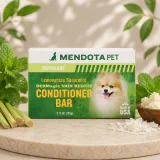
- Maintain: the conditioner bar and grooming spritz between baths, which matters on a long, feathered coat
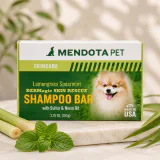 Step 1 — Cleanse
DERMagic Skin Rescue Shampoo Bar
View on Dermagic →
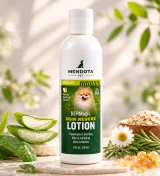 Step 2 — Care
DERMagic Skin Rescue Lotion
View on Dermagic →
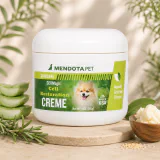 Step 3 — Restore
DERMagic Cell Restoration Crème
View on Dermagic →
 Step 4 — Maintain
DERMagic Skin Rescue Conditioner Bar
View on Dermagic →
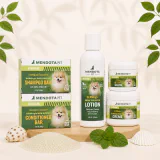
The Bar System puts the four steps in one box, with the Hot Spot Salve as well, and costs less than buying them separately.
 Start the treatment
The DERMagic Bar System
See the full system — dermagic.eu →
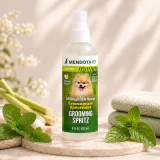
On a long, feathered coat, a conditioning spray between baths helps keep the coat manageable and makes brushing easier, which means the skin underneath gets looked at more often.
 Start the treatment
DERMagic Skin Rescue Grooming Spritz
View on dermagic.eu →
What we are not claiming. Our products are skincare. They help keep skin clean, comfortable and in good condition. They do not treat ear infections, yeast, infections of any kind, hypothyroidism or vitamin A-responsive dermatosis, and nothing in our range has been tested as a way to prevent them. Our own ingredient pages, on sulphur and tea tree, set out what the evidence does and doesn’t support.
When to see a vet
| Sign | Why it needs a vet |
|---|---|
| Any ear trouble in a Cocker under a year old | Early-onset ear disease nearly quadruples the odds of severe disease. Ask about referral early. |
| Head shaking, scratching at the ears, odour, discharge or a painful ear | Needs examination, cytology and a check of the eardrum before anything goes into the ear. |
| Ear problems that keep coming back | The canal may be changing. A dermatologist can assess it before it becomes irreversible. |
| A narrowed, thickened or hard ear canal | Possible end-stage disease. Needs specialist assessment. |
| A red, moist or sore lip fold, or odour from the mouth | Possible lip fold dermatitis, or dental disease, which is the breed’s most common problem. |
| Crusty, sticky or red eyes | Possible dry eye. Needs prescription eye treatment. |
| A dull, thinning coat with weight gain or lethargy | Possible hypothyroidism. A blood test. |
| Greasy, scaly plaques on the chest or belly | Needs a work-up: yeast, allergy, thyroid, and possibly vitamin A-responsive dermatosis. |
| Any new or changing lump | Needs a needle sample. Never manage a lump with a topical product. |
The short version
- Ears are the Cocker’s defining problem. Otitis externa is the English Cocker’s second most common disorder in UK general practice (10.09% a year), and ear discharge is around fifteen times more likely than in other dogs. American Cockers are affected even more often.
- In the English Cocker, it is probably not allergy. Odds of atopic dermatitis are 0.14, among the lowest we have seen in any breed. That breaks the rule that holds for the Labrador and the Westie.
- The canal itself changes. Enlarged wax glands are characteristic of Cocker ears, can appear before disease, and explain why Cocker ear disease so often becomes chronic and ends in surgery.
- Act early. Ear disease before one year of age nearly quadruples the odds of end-stage disease. Owner cleaning habits made no difference.
- Lip folds are the other real problem: an odds ratio of 7.72, with the lips affected in 93% of cases.
- The “seborrhoeic Cocker” is a fading diagnosis. Most would now be called vitamin A-responsive dermatosis, which is rare, and greasy skin needs a proper work-up.
- For your vet: hypothyroidism (odds ratio 2.10), dry eye (7.64) and lumps.
- Not supported: “allergy breed”, chicken allergy, daily ear cleaning, routine ear plucking, “more oil glands”.
- Plan for the long term. Regular bathing and a routine you can keep up matter more than any single product.
Further reading
- Dog ear care: technique, warning signs and what never goes into an ear
- Seborrhoea in dogs: greasy, flaky coats and the genuinely primary conditions
- Top signs of yeast in dogs and why does my dog smell?
- Why is my dog so itchy?: the main itch guide
- Labrador skin problems, West Highland White Terrier skin problems, Golden Retriever skin problems, German Shepherd skin problems and French Bulldog skin problems: the other breed guides
For specific guidance on your dog’s case, email customerservice@dermagic.eu or call +44 7425 388643.