Oatmeal is probably the most trusted soothing ingredient in pet shampoo. It has never been tested in a controlled trial in dogs. Both of those things are true, and the second does not make the first a mistake.
If you have ever stood in front of a shelf of dog shampoos trying to choose something kind for an itchy dog, you have almost certainly been offered oatmeal. It is on the front of bottles from budget supermarket brands to veterinary ranges. It sounds gentle, natural and familiar, and for once the marketing is not wildly out of step with the science.
But the science is not what most people assume it is. Here is what colloidal oatmeal actually is, what it has and has not been shown to do, and the finding that should change how you think about any shampoo for an itchy dog, including ours.
The short answer
- Colloidal oatmeal is a real, well-defined ingredient with an official human-medicine status in the United States as a skin protectant.
- There is good evidence that it helps human eczema as part of a skincare routine, and it is very well tolerated.
- There is no controlled trial of it in dogs. We looked hard. The one canine study we found had 12 dogs and no comparison group.
- In dogs, the best evidence points at the bath, not the ingredient. A placebo shampoo has matched a medicated one for itch relief, and the veterinary guidelines say bathing frequency may be the most important factor.
- It is soothing, not a treatment. It does not kill bacteria, yeast or fungi, and it does not cure anything.
So oatmeal is a perfectly sensible thing to find in a dog shampoo. It just is not the reason the shampoo is working.
What colloidal oatmeal actually is
Colloidal oatmeal is whole oat grain, Avena sativa, milled until it is fine enough to stay suspended in water. That is what “colloidal” means here: not a special chemical, just a particle size small enough to disperse rather than sink.
The specification is precise. The United States Pharmacopeia requires that no more than 3% of particles are larger than 150 micrometres, and no more than 20% are larger than 75 micrometres. Porridge oats are nowhere near that. The fineness is what produces the milky, skin-coating bath that people associate with oatmeal.
In the United States, colloidal oatmeal is an approved over-the-counter skin protectant for humans, under the FDA’s skin protectant monograph. The minimum effective concentration is set at 0.007%, and the approved label wording is that it “temporarily protects and helps relieve minor skin irritation and itching”. In the EU it is an ordinary, unrestricted cosmetic ingredient, and the European Medicines Agency recognises oat for traditional use in minor skin inflammation.
None of that applies to dogs. Human medicine rules cover human products. A dog shampoo containing oatmeal is not an approved anything, and it would be wrong for a pet product to borrow the human drug wording. That distinction matters later.
How it is supposed to work
Oats contain several things that plausibly help irritated skin:
- Avenanthramides, a family of compounds found almost only in oats, have shown anti-inflammatory and anti-itch activity. In laboratory work published in 2008, skin cells responded at extremely low concentrations, and applying avenanthramides to the skin of mice reduced inflammation and scratching. Oats contain around 300 parts per million of them.
- Starches and beta-glucans form a thin film on the skin and hold water against it.
- Saponins give a very mild cleansing action.
- Lipids, the natural fats in the grain, are present too, though their contribution has never been measured separately.
Every one of those mechanisms comes from cell cultures, mice or reviews. None has been shown in dogs. That is not unusual for a skincare ingredient, but it is worth knowing when a bottle tells you oatmeal “repairs the skin barrier”. That has been suggested in human skin-cell studies. It has not been shown on a dog.
The human evidence is genuine, with one caveat
In people, colloidal oatmeal has a respectable track record as part of an eczema routine.
The strongest trial we found was published in 2017: 90 children with eczema used either a 1% colloidal oatmeal cream or a prescription barrier cream, and the oatmeal cream performed no worse than the prescription product. A smaller 2020 study of 61 people reported improvement on an oat-based routine, compared against a standard moisturiser. Safety is excellent. In one study of 2,291 people patch-tested with colloidal oatmeal products, there was only one doubtful reaction.
The caveat is about who did the research. Nearly every human trial and laboratory study of colloidal oatmeal that we found was carried out or funded by Johnson & Johnson, the company behind Aveeno, whose consumer health business is now Kenvue. That does not make the results wrong. Industry funds most skincare research, and these studies were published in peer-reviewed journals. But a field where almost all the evidence comes from the manufacturer of the best-known oatmeal brand deserves a little more caution than one with independent replication.
There is also a real, independent finding that points the other way. A French study of 302 children with eczema found that 14.6% reacted to oat on patch testing and 19.2% on skin-prick testing. Children who had used oat-containing creams were much more likely to be sensitised. The authors advised avoiding oat-protein products in infants with eczema. Nobody has looked for the same effect in dogs, but it is a useful reminder that “natural” and “gentle” are not guarantees.
The canine evidence: almost nothing, and one surprising result
This is where most articles about oatmeal shampoo go quiet, so we will be direct.
We found no controlled trial of colloidal oatmeal in dogs. The only canine study was published in Japan in 1998: 12 dogs, treated with a commercial oatmeal shampoo and rinse, with no comparison group. It reported some relief in mild to moderate itch and little effect in severe or long-standing cases. That is a reasonable pilot observation. It is not evidence that oatmeal works better than water.
And when researchers have tested shampoos properly in itchy dogs, the result is instructive.
In a 2012 randomised controlled trial, 27 itchy dogs were bathed either with a medicated antipruritic shampoo or with the same shampoo base with the active ingredients removed, effectively a placebo shampoo. Itch fell by the same amount in both groups. The active ingredients added nothing measurable. The bath did.
That fits what the International Committee on Allergic Diseases of Animals says in its treatment guidelines for canine atopic dermatitis. Only two specific shampoo products have even modest evidence of their own. Other emollient products “have not been proven to consistently reduce signs” of the disease. And, in the line we think every owner of an itchy dog should read: “the intensity and frequency of bathing may be the most important factor.” Oatmeal is not named.
So the most useful thing we can tell you about oatmeal shampoo is this: the shampoo is a vehicle for the bath. Bathing physically removes pollen, dust-mite debris, scale and surface grime from the coat and skin. It cools and calms. That is where the evidence for relief actually sits, and it applies to any good, gentle shampoo used regularly.
For a fuller look at why dogs itch and where bathing fits, our guide to why your dog is so itchy is organised by where on the body the itch is, which is the quickest route to the likely cause.
Kitchen oats, homemade baths and other practical questions
Porridge oats are not colloidal oatmeal. They are far coarser than the pharmacopoeia specification. If you want to make an oatmeal bath at home, blend plain, unflavoured oats to a very fine powder and steep it in a muslin bag or a clean sock in lukewarm water, squeezing it through. Nobody has compared a homemade version with the commercial ingredient, so we would call it a reasonable approximation rather than the same thing. Never use flavoured or sweetened instant oats.
Rinse well. The human directions for colloidal oatmeal say to pat dry and leave a thin layer on the skin. That makes sense for a person. A dog will lick it off, and residue left in a dense coat can feel heavy and attract dirt. For dogs we would rinse thoroughly.
Keep the water lukewarm. Warm water tends to make itchy skin feel itchier, whatever is in the bath.
Watch your flea treatment. Frequent shampooing can reduce the effectiveness of some spot-on flea products, which is why veterinary guidance recommends systemic flea control for dogs that are bathed often. Fleas remain one of the most common reasons for itch, and our guide to flea allergy dermatitis covers why a single bite can matter.
Claims about oatmeal we would not believe
| Claim | Our verdict |
|---|---|
| “Oatmeal cures itchy skin” | No. There is no canine evidence of a cure, and nothing cures atopic itch. Oatmeal can soothe. |
| “Oatmeal is antibacterial and antifungal” | No evidence. It is a soothing ingredient, not an antimicrobial. |
| “An oatmeal bath treats hot spots” | No data. A hot spot is broken, inflamed skin that needs to be kept clean and protected, and often seen by a vet. |
| “Oatmeal feeds yeast” | No evidence either way, and the yeast on dog skin depends on fat, not starch. |
| “Oats are a common dog food allergen” | Not in the data. Oat did not appear among the causes in 297 food-allergic dogs. |
| “Oatmeal moisturises and repairs the skin barrier” | Shown in human leave-on products and skin-cell studies. Unproven for a rinse-off dog shampoo. |
| “Kitchen oats work exactly the same” | Not as they come. Finely blended oats are a fair approximation. |
Where oatmeal fits, and where our products fit
Oatmeal is a gentle, well-tolerated ingredient with a sensible rationale. If your dog likes an oatmeal shampoo and you bathe regularly with it, there is no reason to stop.
Our own range does not contain oatmeal. We checked both of our core skin products against their published ingredient lists before writing this. Neither has oat in it, and we are not going to pretend that is a deliberate rejection of oatmeal. It is simply a different set of ingredients built around the same idea: regular, thorough cleansing, followed by care that stays on the skin.
That second part matters, and it is where the human oatmeal evidence is actually strongest. The human eczema trials used leave-on creams, not rinse-off washes. In our routine the leave-on step is the Skin Rescue Lotion, an emollient blend of sesame oil, aloe, lanolin, beeswax and shea butter, worked into affected skin rather than rinsed away.
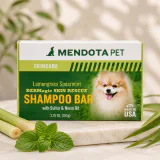 Step 1 — Cleanse
DERMagic Skin Rescue Shampoo Bar
View on Dermagic →
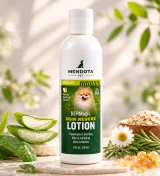 Step 2 — Treat
DERMagic Skin Rescue Lotion
View on Dermagic →
For a dog with persistently itchy, flaky or uncomfortable skin, we recommend the full Dermagic system rather than a single product, because each step does something the others do not: cleanse, care for the skin, restore the coat, and maintain between baths. The routine is what works, and the Bar System puts all of it in one box.
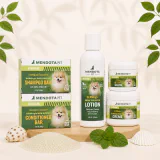 Start the treatment
The DERMagic Bar System
See the full system — dermagic.eu →
The same honesty applies to us as to oatmeal. Neither our products nor anyone’s oatmeal shampoo treats atopic dermatitis, yeast or infection. They make the skin more comfortable and support a routine. A dog whose itch persists despite good flea control and regular bathing needs a vet, because at that point allergy needs proper veterinary management, not another shampoo.
When to see a vet instead
- Itch that keeps the dog awake, or that persists despite good flea control and a regular bathing routine
- Broken, weeping, crusted or bleeding skin
- Patchy hair loss, especially with crusting or scaling
- A strong, persistent odour from the skin or ears, or a greasy coat
- Ear scratching, head shaking or discharge
- Any skin change in a dog that is also unwell, lethargic or off its food
The short version
- Colloidal oatmeal is real, defined and gentle. Finely milled oat, with a recognised human skin-protectant status in the US.
- The human evidence is good but almost entirely industry-funded, and oat sensitisation is a real finding in eczema-prone children.
- There is no controlled trial in dogs. The only study had 12 dogs and no comparison group.
- The bath does the work. A placebo shampoo matched a medicated one for itch relief, and the guidelines say bathing frequency may be the most important factor.
- It soothes. It does not kill anything or cure anything. Be wary of any dog product that says otherwise.
- Rinse well, keep the water lukewarm, and bathe regularly. That advice holds whatever is in the bottle.
Further reading
- Why is my dog so itchy?: the main itch guide, organised by where the dog itches
- What is canine atopic dermatitis?
- Is tea tree oil safe for dogs and cats?, Sulphur as an ingredient and Parabens and SLS in dog shampoo: our other ingredient guides
- Soap, shampoo or shampoo bars?
For specific guidance on your dog’s case, email customerservice@dermagic.eu or call +44 7425 388643.