
The fact that your dog isn’t scratching is the single most useful thing you’ve noticed. It rules out most of what people assume causes hair loss, and it points squarely at a smaller, very different group of conditions — most of which need a blood test to find.
Most articles about canine hair loss lump everything together: fleas, allergies, mange, hormones, stress. That’s not much help when you’re standing in the kitchen looking at a dog who’s going bald and is otherwise completely content.
So let’s split it properly, because the split does most of the diagnostic work for you.
Itchy versus not itchy: the fork in the road
Nearly all hair loss in dogs falls into one of two categories, and they have almost nothing in common beyond the symptom.
Itchy hair loss is caused from the outside in. Something is irritating the skin — fleas, mites, an environmental or food allergy, a contact irritant, a bacterial or yeast infection. The dog scratches, licks, chews and rubs, and the hair comes out because the dog removes it. The follicle itself is usually working perfectly well.
Non-itchy hair loss is caused from the inside out. Nothing is removing the hair. The follicle has stopped producing it. Something further upstream — a hormone, a genetic instruction, blood supply, or damage to the follicle itself — has switched growth off.
That distinction matters enormously, because it changes the entire investigation. An itchy dog needs an allergy and parasite workup. A non-itchy dog needs bloodwork. Treating one as the other wastes months, and months of coat.
If your dog is itching, you’re on the wrong page — start with our guide to the most common skin conditions in dogs and cats or dog skin allergies instead.
First: is it really not itchy?
Worth thirty seconds, because “not itching” is the most commonly mis-observed symptom in dermatology. Owners tend to picture itching as a dog sitting up scratching with a back leg. Dogs express it in a lot of quieter ways.
All of the following count as itching:
- Licking or chewing paws — especially if the fur between the toes has gone rusty-brown
- Rubbing the face along furniture, carpet or your leg
- Scooting the rear along the ground
- Nibbling at the flanks, tail base or between the back legs
- Shaking the head repeatedly, or scratching at ears
- Licking at night — many owners only discover this when they sleep in the same room
Also check for smell and grease. Skin that smells musty, yeasty or like corn chips, or that feels waxy, is inflamed skin — and inflamed skin is nearly always itchy skin, even if you haven’t caught the dog at it.
If several of those apply, treat it as itchy hair loss. If genuinely none do — the dog is comfortable, the skin is dry or normal to the touch, and hair is simply disappearing — read on.
The non-itchy hair loss shortlist
Here is the group you’re actually choosing between.
| Cause | Typical picture | How it’s found |
|---|---|---|
| Alopecia X / Black Skin Disease | Symmetrical loss on ruff, flanks, trousers, tail. Skin darkens to grey or black. Head and front legs spared. Spitz breeds. Onset 1–3 years | Diagnosis of exclusion — everything else ruled out first |
| Hypothyroidism | Symmetrical thinning, “rat tail”, dull brittle coat, weight gain, lethargy, cold-seeking. Middle-aged dogs | Thyroid bloodwork (T4, free T4, TSH) |
| Cushing’s disease | Thin skin, pot belly, drinking and urinating heavily, panting, hunger. Coat thins over the trunk | ACTH stimulation or low-dose dexamethasone suppression test |
| Sex-hormone imbalance | Symmetrical loss around the flanks, genitals and perineum. Often intact or recently neutered dogs | Hormone panel; adrenal imaging |
| Seasonal flank alopecia | Well-defined, near-symmetrical bald patches on both flanks. Appears and resolves with the seasons. Boxers, Bulldogs, Airedales | Pattern and history; sometimes biopsy |
| Post-clipping alopecia | Coat never returns to a clipped or shaved area. Double-coated breeds | History — the clip is the clue |
| Demodectic mange | Often not itchy. Small patches around eyes, muzzle, front legs. Young dogs | Skin scrape |
| Ringworm | Often not itchy. Roughly circular patches, scaly or crusty edges. Contagious to people | Fungal culture or PCR |
| Leishmaniasis | Often not itchy. Silvery, flaking scale over the trunk and head, thinning coat, overgrown claws, ulcers over elbows and pressure points that don’t respond to antibiotics. Any history of travel to the Mediterranean | Quantitative Leishmania antibody titre — a blood test |
| Colour dilution alopecia | Thinning restricted to the diluted-colour areas. Blue and fawn coats — Frenchies, Staffies, Dobermans | Breed, coat colour, sometimes biopsy |
| Pressure points and calluses | Hairless, thickened patches over elbows and hocks. Large breeds, hard floors | Location alone |
| Telogen effluvium | Diffuse shedding a few weeks after illness, surgery, pregnancy or major stress | History; resolves on its own |
Three entries on that list deserve calling out, because they’re where most self-diagnosis goes wrong.
Demodex and ringworm are frequently not itchy
Almost everyone assumes mites and fungus mean a frantically scratching dog. Often they don’t.
Demodectic mange — the mite type that isn’t contagious between dogs — commonly presents in its localised form as a few small, quiet bald patches around the eyes, muzzle or forelegs on a young dog, with no itching at all. It only turns itchy once bacteria move into the damaged follicles. A skin scrape finds it in minutes.
Ringworm is a fungal infection, not a worm, and it typically produces roughly circular patches of hair loss with scaly or crusty skin and minimal itch. It’s transmissible to other pets and to people in the household, which makes it worth excluding early rather than late.
Leishmaniasis — if your dog has ever been to the Mediterranean, read this
This is the one on the list that can kill, and it is the one most often missed in a dog that isn’t scratching.
Canine leishmaniasis is caused by a parasite spread by sandfly bites. Skin signs are its single most common manifestation, appearing in somewhere between 56% and 90% of clinical cases — and in one series of 100 dogs, 21% had skin signs and nothing else at all. That is exactly the dog this guide is written for: a coat that is deteriorating, an owner reasonably shopping for skincare, and no itch to suggest anything urgent.
The characteristic picture is silvery-white, flaking scale over the trunk and head with thinning hair, which was present in around three-quarters of affected dogs. Alongside it you may see hair loss around the eyes giving a faint “spectacles” look (about a quarter to a third of cases — common, but not the giveaway it’s often described as), thinning on the ear margins, claws that grow long and curled, and ulcers over the elbows and other pressure points that don’t heal on antibiotics. Pruritus is usually absent unless a secondary bacterial infection has set in.
Look past the skin as well. Over half of affected dogs have visibly enlarged lymph nodes, which is the single most useful thing you can check at home — feel under the jaw and behind the knees. Weight loss with muscle wastage, lethargy, nosebleeds, eye inflammation, and increased drinking and urinating are all part of the same disease. The last of those matters most, because kidney failure is what actually kills these dogs.
The travel history is the key, and it is wider than people expect. The parasite is endemic across Portugal, Spain, southern France, Italy, Greece, Malta, Cyprus, the Adriatic coast and Turkey — seroprevalence in apparently healthy dogs runs at about 19% in Greece, with Portuguese hotspots approaching 30%. The sandfly vector is now established in south-west Germany, where a locally acquired case has been recorded. Crucially, incubation runs from three months to seven years, so a single holiday in Spain years ago still counts. Rescue and rehomed dogs from southern Europe are a common route into northern European households.
What to do: ask your vet for a quantitative Leishmania antibody titre — a numerical blood result, not a yes/no in-clinic snap test — usually alongside PCR, bloodwork and a urine protein:creatinine ratio. Treatment is a prescription-only systemic course, typically meglumine antimoniate or miltefosine combined with allopurinol, and it runs for many months and sometimes indefinitely. Clinical recovery with a normal quality of life is a realistic goal, so a diagnosis is emphatically not a reason to give up on a dog.
Two things to be clear about. No shampoo, lotion, balm or supplement — ours or anyone else’s — has any effect on this parasite. These signs mean a blood test, not a skincare routine. And you cannot catch it from your dog: transmission needs a sandfly, and there is no dog-to-human route. If you are travelling south with a dog, a pyrethroid repellent collar is the measure with real evidence behind it, and it is worth noting that the CaniLeish vaccine has been withdrawn from the European market, though other vaccines remain available — ask your vet rather than older online advice.
Both are treatable, both are treated completely differently to everything else on the list, and both are missed constantly because the dog isn’t scratching. That is exactly why the diagnostic work below isn’t optional. There’s more detail in our guides to mites and mange in dogs and cats and skin problems caused by parasites.
Reading the pattern
While you’re waiting for a vet appointment, four observations will narrow things down more than any amount of searching. Write them down and take them with you.
1. Is it symmetrical? This is the big one. Loss that mirrors itself on both sides of the body points hard at a hormonal or follicular cause. Parasites, allergies and infections don’t arrange themselves neatly. If you can fold the dog down the middle and the bald areas match, you’re almost certainly in endocrine territory.
2. Where did it start, and what’s spared? Alopecia X characteristically starts at the ruff, trousers and tail and spares the head and front legs — affected dogs look like they’re wearing a fluffy hat and boots. Cushing’s tends to thin the trunk. Sex-hormone alopecia gathers around the flanks and perineum. Seasonal flank alopecia does what its name says.
3. What colour is the exposed skin? Pale, normal-looking skin is reassuring. Skin that is darkening to grey or black is not — that’s hyperpigmentation, the skin’s response to chronic exposure and inflammation, and it’s the hallmark of Black Skin Disease. Our complete guide to Black Skin Disease in dogs covers what that darkening actually represents.
4. How old is the dog, and what else changed? Onset between one and three years in a spitz breed suggests Alopecia X. Middle age with weight gain and lethargy suggests thyroid. Any age with heavy drinking, urinating and a pot belly suggests Cushing’s. Diffuse shedding six to twelve weeks after surgery, illness or a litter is very likely telogen effluvium, and will resolve without treatment.
For how vets read these patterns in more depth, see alopecia in dogs: causes and diagnosis.
What to ask your vet for
Non-itchy hair loss is one of the few dermatology presentations where you genuinely need laboratory work rather than observation. Go in asking for:
- A full thyroid panel — total T4, free T4 and TSH. A total T4 on its own can mislead.
- Adrenal testing — an ACTH stimulation test or low-dose dexamethasone suppression test, if there’s any suggestion of Cushing’s.
- A deep skin scrape — for Demodex. Cheap, fast, and rules out a whole category.
- A fungal culture or PCR — for ringworm.
- A quantitative Leishmania antibody titre — if your dog has ever spent time anywhere around the Mediterranean, or came from there. Ask for a numerical titre rather than an in-clinic yes/no test, and mention the travel history explicitly, because without it nobody will think to look.
- A skin biopsy — where everything above comes back clear. This is often how Alopecia X and colour dilution alopecia are finally confirmed.
Do this before concluding anything. Alopecia X in particular is a diagnosis of exclusion — it means “we ruled out everything else”, not “we found this”. A dog with untreated hypothyroidism doesn’t need better skincare; it needs thyroid medication, and it will do very well on it. No topical product on earth substitutes for that, and we’d rather say so plainly.
Breed changes how likely each of these is. The thyroid panel is a higher priority in some breeds than others — the Golden Retriever carries roughly three times the Labrador’s odds of hypothyroidism, which is covered in Golden Retriever skin problems.
The part almost nobody explains: why it stops being non-itchy
Here’s the thing that reframes the whole problem, and it’s the reason a lot of owners arrive here having watched a quiet, comfortable dog gradually become an uncomfortable one.
A dog’s coat isn’t only insulation. It shades the skin, holds moisture in, keeps physical contact off it, and helps maintain the skin’s barrier — the thin protective layer that keeps normal skin microbes on the outside where they belong.
Take the coat away and that barrier degrades. Yeast and bacteria that live harmlessly on every dog in the world start multiplying in the exposed skin and down into the follicles. And that produces a completely new set of symptoms sitting on top of the original one:
- The smell — musty, yeasty, unmistakable once you know it
- Greasiness or waxy texture
- Thickening of the skin, sometimes described as elephant skin
- Darkening beyond what the original condition caused
- And, finally, itching — in a dog that wasn’t itchy at all to begin with
So the sequence runs: follicle stalls → coat is lost → barrier fails → overgrowth moves in → dog becomes itchy and miserable. If your dog has moved from “losing hair but comfortable” to “losing hair and now scratching”, that’s what has happened. It’s a second problem layered onto the first.
The important part is what it implies. That second layer is not genetic, not hormonal, and not permanent. It’s an overgrowth on the skin surface and in the follicle — and it’s the layer that responds fastest to treatment. It’s also the layer that keeps the follicle inflamed and unable to restart, which means clearing it does two jobs at once.
That is the entire logic of the Dermagic System.
What you can treat topically — and what you can’t
Let’s be exact about this, because it’s where honest advice matters.
A topical protocol will not correct an endocrine disease. It won’t fix an underactive thyroid or manage Cushing’s. Those need veterinary medication, and that’s not a limitation we’re going to dress up.
What it does do is treat the skin itself — help manage skin prone to secondary yeast and bacterial overgrowth once the coat is lost, restore the barrier, and soften thickened hyperpigmented skin. In conditions where there’s no medical fix on offer at all — Alopecia X being the obvious one, where owners are routinely told the loss is cosmetic and to live with it — that’s frequently the difference between an uncomfortable dog and a comfortable one.
What it won’t do is restart a stalled hair cycle, and we’re not going to imply otherwise — no treatment reliably does that, the hormonal drugs included. If Alopecia X is where you’ve landed, the full comparison of treatment options sets out what each route actually achieves and where the numbers come from.
And it runs perfectly well alongside whatever your vet prescribes. A hypothyroid dog on levothyroxine still has months of damaged, exposed skin to recover, and treating it topically while the medication does its work is the fastest route back to a coat.
The Dermagic System
Four steps — cleanse, treat, target, restore. No steroids, no hormones, nothing systemic.
| Step | Product | What it does |
|---|---|---|
| 1. Cleanse | Skin Rescue Shampoo Bar or Peppermint & Tea Tree Shampoo | Strips grease, scale and yeast off the skin so the lotion can actually reach it. Sulphate-free — exposed skin is already compromised. |
| 2. Treat | Skin Rescue Lotion | The engine of the System. Helps manage skin prone to secondary yeast and bacterial overgrowth. |
| 3. Target | Hot Spot Salve | For raw, broken or scratched patches. Thick enough to stay put where lotion would be licked off. |
| 4. Restore | Cell Restoration Crème | For the regrowth phase — softens thickened dark skin and supports new coat coming through. |
Run all four. They’re not alternatives to each other and they compound. The cleanse is what allows the lotion to reach skin at all — massaged into an unwashed, greasy coat, it never gets there. The lotion helps manage skin prone to secondary overgrowth. The salve covers broken skin where the lotion would simply be licked away. The crème protects a coat that will have taken you months to grow back, and is where the thickened black skin finally softens.
Every recovery we publish went through the complete System. When we hear that Dermagic “didn’t work”, it’s very nearly always a half-run protocol — or one stopped the week the first fuzz appeared.
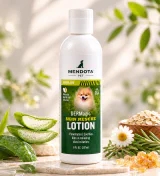 Start the treatment
DERMagic Skin Rescue Lotion
The core of the System — dermagic.eu →
Start the treatment
DERMagic Skin Rescue Lotion
The core of the System — dermagic.eu →The full step-by-step, including dosing, bathing frequency and how to adapt it for cats, is in the complete guide to the Dermagic System.
Three things that decide whether it works
- Get it onto skin, not fur. Part the coat in lines with your fingers and work the lotion in with fingertips. On a heavy or double coat this is the single biggest determinant of success.
- Stop the licking. A t-shirt or recovery suit for an hour afterwards. Lotion licked off in ninety seconds cannot do anything.
- Don’t clip. Especially not a double-coated breed. Clipping risks post-clipping alopecia, and in a dog whose follicles are already failing to restart you can be waiting twelve to twenty-four months for the coat. It isn’t permanent, but it’s a long wait for nothing gained. Brush the dead undercoat out instead.
What recovery actually looks like
| Timeframe | What to expect |
|---|---|
| Week 1 | Smell drops noticeably. Any itching settles. Skin looks less angry. |
| Weeks 2–3 | Greasiness clears. Thickened, darkened skin begins to soften and lighten. |
| Weeks 4–6 | Fine fuzzy regrowth appears — the first real evidence it’s working. |
| Months 2–4 | Undercoat thickens, guard hairs come through, bald areas shrink inward. |
| Months 4–12 | Full coat. A heavy double coat can take most of a year. |
The skin changes come quickly. The coat takes as long as the hair cycle takes, and no product shortens that. Owners who give up at week six stop at exactly the wrong moment.
Dogs this has actually happened to
We’d rather show you than tell you — every one of these started as non-itchy hair loss that owners were told to live with:
- Gunner — lost hair and the skin went black after surgery, and it wasn’t growing back.
- Sir Winston — five years old, effectively bald, lethargic. Six months later, full coat.
- Yogi — diagnosed at ten and told it was cosmetic. Pink skin and his personality back.
- Gus — thyroid problem plus hair loss and blackening skin, treated on both fronts at once.
- A Golden Retriever — regrew his coat over five months.
None involved steroids, hormones or clippers.
Where to start
If your dog is losing hair and isn’t scratching:
- Check it’s genuinely not itchy — paws, face-rubbing, scooting, night-time licking, smell.
- Note the pattern — symmetry, where it started, what’s spared, and the colour of the exposed skin.
- Get the bloodwork and a skin scrape. Thyroid, adrenal, Demodex, ringworm. Do not skip this.
- Start treating the skin while you work through the diagnosis — the overgrowth and barrier damage need dealing with regardless of what the tests show.
- Give it three months before judging the skin, and six before judging the coat.
If your dog is a Pomeranian or another spitz breed, go straight to our Pomeranian alopecia guide — the breed specifics matter — or work through the nine causes of Pomeranian hair loss if you don’t have a diagnosis yet. French Bulldog owners should start with French Bulldog skin problems, which covers colour dilution alopecia alongside folds and tail pockets.
Not sure what you’re looking at? Get in touch — tell us your dog’s breed and age, where the loss started, whether it’s symmetrical and what colour the skin is, and we’ll tell you honestly what we think you’re dealing with, including when the answer is “see your vet this week”.