Grass pollen allergy in dogs doesn’t show up as a runny nose — it shows up as itchy paws, hot spots and a miserable, scratching pet. Here’s how to manage it.
Not the same as hay fever
Grass pollen allergy in dogs is fairly common. You’d expect — since grass pollen is an inhaled allergen — that symptoms would mirror what humans experience: runny nose, sneezing, watery eyes. They don’t.
Dogs allergic to grass pollen most commonly break out in skin reactions instead.
What to look for
The signs of canine grass pollen allergy include:
- Ear infections
- Red, raw hot spots
- Hair loss
- Excessive scratching
- Face and ear rubbing on the floor or furniture
- Chewing on paws
If your dog is doing several of these together and the timing lines up with pollen season, grass is a likely candidate. Ear infections are usually the loudest of these signs — our guide to dog ear care explains why an allergic dog’s ears flare so reliably, and what to do about it.
Confirming the diagnosis
To determine that grass pollen is the offending allergen, your dog will need veterinary testing — typically a physical examination, blood tests, and intradermal testing. Intradermal testing involves injecting various potential allergens into the skin in tiny amounts to see which ones produce a reaction. It’s the most reliable way to identify the specific trigger.
Prevention — what actually helps
Grass pollen is difficult to control entirely, but several practical measures cut exposure significantly:
- Keep the grass in your garden mowed short and limit your dog’s exposure to tall grasses and weeds. If possible, create an area for the dog that is primarily gravel or sand to reduce contact with grass.
- Wipe the dog down with a damp cloth before bringing them back inside. This removes grass pollen clinging to the fur and reduces the irritation it causes.
- Discourage rolling in grass. If you see the dog rolling, use a training command to stop it. Over time, this can deter the behaviour and prevent future rolls in the hay.
- Vacuum your home and wash dog bedding frequently to remove the pollens carried in by pets and people.
Protective boots are also a good option for dogs whose paws are the worst-affected area. Rubber boots or therapeutic paw boots keep the pollen off the paws entirely while still letting the dog go outside. If the feet are already being licked raw, our dog paw care guide sets out the rinse-and-dry routine and what to put on the skin between the toes.
Relief when the flare-up happens
When the symptoms appear despite your best efforts, topical care is about keeping the skin comfortable and intact while the pollen season runs its course.
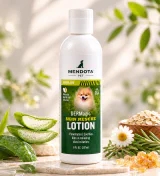
For general itching and inflamed skin, Dermagic Skin Rescue Lotion goes onto the affected areas and stays there, which on a dog that is scratching is the point — covered skin is skin that is harder to break open. This paragraph used to add “with natural antimicrobials that prevent secondary infection” and promise “fast relief to the itching”. Both are withdrawn. We do not claim our products kill organisms, and we cannot show the formula has an anti-itch action of its own.
For hot spots that have already broken out, Dermagic Hot Spot Salve is the thicker version, made to stay put on a raw patch and keep it covered. We have dropped the claim that it “clears them up within a couple of days” — we have no data behind that timescale, and an established, weeping hot spot on a pollen-allergic dog may well need a vet rather than a salve.
One honest note about pollen allergy specifically. Nothing topical addresses the allergy itself. If your dog is miserable every grass season, the conversation worth having with a vet is about the drugs that target the itch pathway directly — oclacitinib or lokivetmab — or about immunotherapy. Washing and barrier care make a genuine difference alongside those, and they are not a replacement for them.
 Start the treatment
DERMagic Skin Rescue Lotion
Soothe grass-pollen itching — dermagic.eu →
Start the treatment
DERMagic Skin Rescue Lotion
Soothe grass-pollen itching — dermagic.eu →For specific guidance on your dog’s allergy email customerservice@dermagic.eu or call +44 7425 388643.