
Gunner had surgery in 2011. After the clip, his hair never came back and the skin darkened. Here’s what that condition actually is, what happened over the following five months, and what we can and can’t claim about it.
What went wrong: a close surgical shave
Gunner went in for surgery in 2011. The surgical team shaved him close — close enough that months later, the crisp outline of the razor was still visible on his rear. The hair never grew back. The skin in the shaved area turned black.
This is more common than people realise, and it has a name: post-clipping alopecia. A dog’s follicles cycle independently, so at any moment a share of them are resting. Remove the coat and those resting follicles can fail to restart. The hair doesn’t come back, and the bald area holds the clipper’s outline because that’s exactly where the coat was taken off.
The skin then darkens. That’s secondary hyperpigmentation associated with the affected hairless skin — not a separate disease, and not something living on the surface.
The treatment: daily lotion, patience
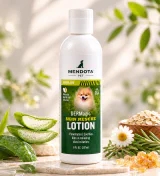
Gunner’s mum Stacy ordered DERMagic Skin Rescue Lotion and started a daily routine in November 2011. Massage it in, every day, into the affected skin. No drugs, no steroids, no shaving.
The timeline
What Stacy recorded:
- November 2011 — starting point. Bald rear, fully pigmented skin, crisp clipper outline still visible
- February 2012 — about three months in. Scaling cleared, pink skin returning, skin felt warm rather than cold. Whiskers starting to appear
- March 2012 — fur coming back across the affected area
What’s reliable here and what isn’t
Two different things happened to Gunner, and they deserve to be separated.
The skin improved within weeks-to-months of daily topical care. That’s the dependable part. Bare skin dries out, scales and picks up secondary yeast and bacterial overgrowth, and treating it topically resolves that. It’s why the texture and temperature changed.
The coat came back over four to five months. We’d like to claim credit. We won’t: post-clipping alopecia frequently resolves on its own on roughly that timescale, and a before-and-after photo pair can’t tell you which happened. There is no controlled trial showing any topical product restarts an arrested hair cycle — ours included.
The bigger lesson on clipping
Ask the vet to clip as little as the procedure allows, and no closer than necessary. Clipping is often genuinely required and isn’t something to refuse — but a wider or closer clip than needed raises the odds of a patch that doesn’t return, especially in double-coated breeds.
If your dog has been left bald after a clip, treat the exposed skin while it’s exposed. That’s worth doing on its own terms, whatever the coat does.
Where to start
For a localised area like Gunner’s, a single bottle of Skin Rescue Lotion covers it. For the wider picture — including treatments we don’t sell — see Alopecia X treatment: what works, what doesn’t, and why.
 Start the treatment
DERMagic Skin Rescue Lotion
Start treatment — dermagic.eu →
Start the treatment
DERMagic Skin Rescue Lotion
Start treatment — dermagic.eu →For specific guidance on post-surgical hair loss, email customerservice@dermagic.eu or call +44 7425 388643.