Gus the dog had a thyroid problem, allergies, and the unmistakable signs of Black Skin Disease — hair loss and skin turning black. His owner Angela’s story shows what real recovery looks like.
A real dog with a real problem
This is the kind of case so many dog owners recognise. Gus is Angela’s dog. He’d been diagnosed with a thyroid problem and was losing his hair. His skin was turning black across large patches of his body. The disease had spread widely.
His vet had labelled it “bilateral Alopecia,” or Alopecia X. It’s worth pausing on that name.
Why “Alopecia” isn’t really a diagnosis
Alopecia is the medical term for hair loss. That’s all it means — Latin via Greek for losing hair. When you bring your dog to the vet and say “he’s losing his hair,” and the vet says “It’s Alopecia,” they have repeated what you just said back to you in a different language. It describes the visible symptom; it says nothing about the cause.
“Bilateral Alopecia” simply means hair loss on both sides of the body. Still a description, still not a cause.
What’s really going on underneath
Hair loss with darkening skin has several possible causes, and they need separating before anyone treats anything — thyroid disease, Cushing’s, sex-hormone imbalance, demodectic mange, or the hair cycle arrest known as Alopecia X.
Gus’s case is worth being precise about, because it isn’t Alopecia X. Gus had a diagnosed thyroid problem and allergies. Hypothyroidism is one of the classic causes of hair loss with hyperpigmentation — and, importantly, it’s treatable once identified. That’s exactly why a vet should run thyroid and adrenal bloodwork before settling on a diagnosis of exclusion like Alopecia X.
What Gus also had, on top of the endocrine problem, was the thing that makes these dogs genuinely miserable: exposed skin with secondary irritation and infection on it, plus allergic paw-biting severe enough to draw blood. That is the part topical care addresses.
Two things worth being clear about, because they’re widely repeated and wrong:
- The skin doesn’t darken because something is under it. Chronically hairless skin hyperpigments through exposure — and the pigment fades as the coat returns, which is the opposite of what an infection would do.
- Yeast on a dog with hair loss is a complication, not the cause. Bald skin has lost its protection, so bacterial and Malassezia overgrowth move in on top. That overgrowth is real, it’s uncomfortable, and it’s very treatable — it just isn’t what started the hair loss.
Angela’s first message
“Ok DERMagic — we are loving your products! Gus is doing so much better! He has a thyroid problem and was losing his hair. His skin was turning black too. He also has allergies — his paws would get really red and he would bite them until they would bleed… until we used the Hot Spot Salve. It is instant relief for him. He also enjoys us applying the Skin Rescue Lotion.”
Two products. Topical. Used consistently. That’s where the recovery started.
A couple of months later
Angela wrote again in late April:
“Here is a pic of Gus today. His skin is not black and his hair is growing back. We are so happy. Thank you DERMagic. We will keep you posted.”
The blackness was fading. The hair was returning. The itching that had been driving him to bite his paws until they bled — gone.
And later still
The final update was the one that mattered most:
“DERMagic, look at my baby. His hair has completely grown back. We are so excited.”
A handsome, full-coated, proud-looking dog. Indistinguishable from the early photos in the way that matters most: he was comfortable, healthy and himself again.
What Gus’s case does and doesn’t show
The honest reading of Gus is this. He had an identified, treatable endocrine problem being managed by his vet, allergies causing him real distress, and exposed skin carrying secondary irritation. The topical care went at the third of those — clearing what was growing on the skin, settling the paw-biting, and supporting the barrier while the coat came back.
That’s a genuine and worthwhile job, and it’s the one topical care can do:
- It’s topical, so it acts where the secondary problem actually is
- It contains no steroids, antibiotics or antihistamines
- It carries none of the systemic risk of the hormone-suppressing drugs offered for hair loss
What it isn’t is proof of a cure. Gus was also being treated for his thyroid, and coat in these conditions varies on its own — so a single owner’s before-and-after, however striking, can’t establish what caused what. We’re glad to show Angela’s photographs and her words. We won’t pretend they’re a clinical trial.
If your dog is losing hair and the skin is turning black, the first move isn’t a product — it’s bloodwork, so you know which of the possible causes you’re dealing with. Then treat the skin, whatever the answer turns out to be. For the full comparison of what each treatment route actually achieves, see Alopecia X treatment: what works, what doesn’t, and why.
 Start the treatment
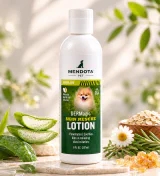
DERMagic Skin Rescue Lotion
Start treatment — dermagic.eu →
Start the treatment
DERMagic Skin Rescue Lotion
Start treatment — dermagic.eu →For guidance on your dog’s specific case, email customerservice@dermagic.eu or call +44 7425 388643.