Pomeranians are the breed most affected by Alopecia X — also called Black Skin Disease. The coat thins from the collar and trousers backward, the exposed skin darkens, and most owners are told it’s cosmetic and to live with it. It usually doesn’t have to be.
This is a breed-specific guide: why Poms in particular, how to tell real alopecia from puppy uglies, what your vet needs to rule out first, and how to treat it topically without steroids, hormone implants or clippers.
Why Pomeranians specifically
Alopecia X clusters heavily in the Nordic spitz breeds — Pomeranians, Chow Chows, Keeshonds, Samoyeds and Alaskan Malamutes — and the Pomeranian sits at the top of that list. It also turns up in Miniature Poodles, which aren’t spitz at all, and that inconvenient exception is part of why the underlying mechanism is still argued over.
Three things stack up against the breed:
- A dense double coat. A soft insulating undercoat under a coarse guard coat. When the follicle stalls, there’s a lot of coat to lose and it’s very visible.
- Inherited follicular behaviour. The follicle appears to fail to re-enter its growth (anagen) phase and gets stuck. It runs in lines, which is why breeders see it cluster in families.
- A small, closely bred gene pool. Popular toy breeds concentrate whatever is in the line, helpful or otherwise.
Nobody has definitively nailed the mechanism. What’s clear in practice is the pattern — and that the visible misery is usually not the follicle problem itself but what moves in afterwards.
What it actually looks like
The classic Pomeranian presentation is unusually consistent:
- Starts with the coat losing its plush texture — the “teddy bear” look goes flat
- The collar (ruff), trousers (rear legs) and tail go first
- Loss is symmetrical — both sides equally
- The head and front legs are typically spared, which is why an affected Pom often looks like it’s wearing a fluffy hat and boots
- The exposed skin gradually turns grey, then black, and thickens
- Usually begins between one and three years old, after the adult coat has come in
That darkening is why it’s called Black Skin Disease. It’s hyperpigmentation — skin responding to chronic exposure and inflammation.
Alopecia X or puppy uglies?
Worth separating, because the two get confused constantly and one of them needs no treatment at all.
| Puppy uglies | Alopecia X | |
|---|---|---|
| Age | Roughly 4–10 months | Usually 1–3 years |
| Skin colour | Stays pale and normal | Darkens to grey or black |
| Pattern | Patchy, scruffy, uneven | Symmetrical; spares head and front legs |
| Smell / itch | None | Often, once infection sets in |
| Outcome | Adult coat arrives on its own | Does not resolve unaided |
If your Pom is seven months old, looks moth-eaten, and the skin underneath is pale and healthy — that’s very probably a coat transition. Wait it out.
If the skin is going dark, it isn’t puppy uglies. The wider picture is in our complete guide to Black Skin Disease in dogs.
Not yet certain this is alopecia at all? Why is my Pomeranian losing hair? works through all nine causes — coat blow, allergies, parasites, thyroid, post-clipping alopecia — and how to tell them apart before you treat anything.
Get the diagnosis right first
Alopecia X is a diagnosis of exclusion, and this is the part we’d ask you not to skip. Several conditions produce near-identical symmetrical hair loss, and some of them are serious:
- Hypothyroidism — very treatable, needs bloodwork to find
- Cushing’s disease (hyperadrenocorticism) — needs proper investigation and management
- Sex-hormone imbalance — adrenal or gonadal in origin
- Demodectic mange — found on a skin scrape, and treated differently
- Ringworm — fungal, contagious to people
Ask your vet for thyroid and adrenal bloodwork and a skin scrape before anyone settles on Alopecia X. A natural topical protocol will not fix an underactive thyroid, and no amount of good skincare substitutes for a diagnosis. See alopecia in dogs: causes and diagnosis for how vets read the patterns.
Why the conventional options disappoint owners
Once other causes are excluded, the usual menu is thin — which is why so many Pom owners end up looking for something else:
- “It’s cosmetic, live with it.” The most common outcome, and the reason most owners find this page. Given the rest of the menu it’s defensible advice — but it leaves the exposed skin unmanaged.
- Neutering. About 43% of intact males regrow fully, usually within three months. Relapse within one to two years is common, though not universal — some complete responders stayed clear for years.
- Melatonin. Roughly 40–60% in uncontrolled studies. Cheap, low-risk, worth a try; not a solution.
- Trilostane, deslorelin, mitotane, growth hormone. Variously off-label, obsolete, or carrying side effects that are hard to justify for a cosmetic complaint. Most owners, understandably, decline.
- Steroids. Actively counterproductive here — glucocorticoids arrest hair follicles and cause follicular atrophy, producing the very pattern being treated. See why we avoid steroids for pet skin conditions.
We’ve gone through all of these properly — the real response rates, where the numbers come from, and what the studies did and didn’t control for — in Alopecia X treatment: what works, what doesn’t, and why. If you’re choosing between routes, read that first.
The natural route: treat the skin, not the hormones
Here’s the distinction that matters for a lot of Poms.
The follicle stall is genetic, and nothing reliably restarts it. But the misery isn’t the stall. Once that skin is exposed and its barrier compromised, yeast and bacteria that live harmlessly on every dog overgrow on it. That’s what produces the odour, the thickening, the itch and the greasiness — and Alopecia X on its own causes none of those.
Clear the overgrowth topically and restore the barrier, and your dog is meaningfully more comfortable regardless of what the coat does. That’s a real, achievable goal, and it’s the honest basis of the Dermagic System.
Whether it helps the coat return is a separate question, and nobody can answer it with confidence — high-quality controlled evidence for Alopecia X treatment is extremely limited. What is suggestive is that hair in this condition reliably regrows at sites of minor local trauma such as biopsy punches, which indicates the follicles are held back locally rather than by circulating hormones. That makes the skin a sensible place to put your effort. It doesn’t make it a cure, and we won’t call it one.
The Dermagic System — what to actually use
The Dermagic System is the four-step topical protocol the range was built around, and it’s what most owners of an alopecic dog end up running. It’s the single most common route to the recoveries further down this page.
Four steps: cleanse, treat, target, restore. No steroids, no hormones, nothing systemic.
| Step | Product | What it does for an alopecic Pom |
|---|---|---|
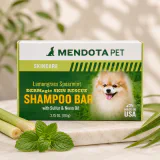
| 1. Cleanse | Skin Rescue Shampoo Bar or Peppermint & Tea Tree Shampoo | Strips the grease and yeast out of a dense double coat so the lotion can reach skin. Sulphate-free — a Pom’s exposed skin is already compromised. |
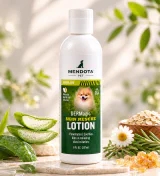
| 2. Treat | Skin Rescue Lotion | The engine of the System. Helps manage skin prone to secondary yeast and bacterial overgrowth — usually what’s making the dog itchy. |
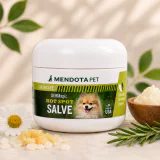
| 3. Target | Hot Spot Salve | For raw, broken or scratched patches. Thicker than the lotion so it stays put on a spot the dog keeps worrying at. |
| 4. Restore | Cell Restoration Crème | For the regrowth phase — softens thickened black skin and supports new coat as it comes through. |
Run all four steps. They aren’t alternatives to one another — each does a different job and they compound. The cleanse is what lets the lotion reach skin through a Pomeranian’s double coat. The lotion helps manage skin prone to secondary overgrowth. The salve covers the broken patches where lotion would just be licked away. The crème protects and thickens the new coat you’ll have spent months growing back.
Every Pomeranian recovery further down this page went through the whole System, not one product on its own. When we hear that Dermagic “didn’t work”, it’s almost always a half-run protocol — lotion massaged into an unwashed coat, or everything stopped the week the first fuzz appeared.
 Start the treatment
DERMagic Skin Rescue Lotion
The core of the System — dermagic.eu →
Start the treatment
DERMagic Skin Rescue Lotion
The core of the System — dermagic.eu →The full step-by-step, including dosing and how to adapt it for cats, is in the complete guide to the Dermagic System.
Applying it to a Pomeranian
The protocol is the same as any dog’s. Three things are genuinely different about doing it on a Pom.
1. Getting through the coat
A double coat is designed to keep liquid off the skin. That works against you here.
- Brush the dead undercoat out first, thoroughly, before every bath. A slicker followed by an undercoat rake. This alone makes a visible difference to airflow and smell.
- In the bath, work the shampoo down to the skin in sections — part the coat with your fingers and go line by line rather than lathering the surface. Leave it on for a few minutes before rinsing.
- Rinse for longer than feels necessary. Residue in a dense coat causes its own irritation.
 Start the treatment
DERMagic Skin Rescue Shampoo Bar
Shop on dermagic.eu →
Start the treatment
DERMagic Skin Rescue Shampoo Bar
Shop on dermagic.eu →2. Getting the lotion onto skin
This is where Pom owners most often go wrong — the lotion ends up on fur.
Part the coat in lines, the way you’d part hair, and work the lotion in with fingertips directly onto skin. Concentrate on the areas that are actually affected: ruff, flanks, trousers, tail base. You don’t need to cover the head and front legs if they still have coat.
A Pomeranian is a small dog, so a little goes a long way — enough to cover, not enough to sit in a layer.
Twice daily for the first week, then once daily.
3. Stopping the licking
A small dog can reach almost all of itself. Put a toddler t-shirt or a small recovery suit on afterwards and leave it on for at least an hour. Lotion licked off in ninety seconds cannot work — this is the single most common reason a protocol appears to fail.
4. Raw patches get the salve, not the lotion
Where a Pom has scratched itself open — usually the ruff or the tail base — use Hot Spot Salve on those specific spots instead. It’s thicker than the lotion and stays on a wound that the dog keeps returning to, rather than being licked or rubbed straight off. Lotion everywhere else, salve on the broken bits.
 Start the treatment
DERMagic Hot Spot Salve
For broken and raw spots — dermagic.eu →
Start the treatment
DERMagic Hot Spot Salve
For broken and raw spots — dermagic.eu →Do not clip a Pomeranian
Worth its own heading, because the advice is still handed out and it can do lasting damage.
Clipping a double-coated breed risks post-clipping alopecia — the coat can be very slow to return. Failure to regrow within three to four months is the point at which vets name it, and delayed cases are reported taking twelve to twenty-four. It is not permanent: the follicles aren’t destroyed and the coat does normally come back. But in a Pom whose follicles are already struggling to restart, a clip removes the coat that was covering the problem and you may be waiting a very long time to get it back.
Brush the dead coat out instead. If a groomer tells you a close clip will help an alopecic Pom, find a different groomer. The full picture — including which of the popular warnings about shaving are actually true — is in should you shave a double-coated dog.
What recovery looks like
Realistic expectations matter, because a Pomeranian coat is slow by design.
| Timeframe | What to expect |
|---|---|
| Week 1 | Smell reduces. Any itching settles. Skin looks less angry. |
| Weeks 2–3 | Greasiness clears. Thickened black skin begins to soften. |
| Weeks 4–6 | Skin visibly lightening. Fine fuzzy undercoat appears — the first real win. |
| Months 2–4 | Undercoat thickens. Guard hairs start coming through. Bald areas shrink inward. |
| Months 4–12 | Full plush Pomeranian coat. A heavy coat can take most of a year. |
The skin changes come fast. The coat takes as long as the hair cycle takes, and no product changes that. Owners who stop at week six because “it’s only fuzz” stop precisely at the point it was working.
Two Pomeranians who came back
We’d rather show you than tell you:
- Sir Winston — five years old, effectively bald, lethargic. Six months later: full coat, full life.
- Yogi — diagnosed at ten, told it was cosmetic and to live with it. Years on, pink skin and his personality back.
Both followed the same route. Neither involved hormones, steroids or clippers.
Maintenance after regrowth
Alopecia X can recur. Once the coat is back:
- Keep bathing with a Dermagic shampoo or bar every two to four weeks
- Brush the undercoat out properly and regularly
- Use the Cell Restoration Crème on any area that looks like it’s thinning again
- Restart the lotion at the first sign of darkening skin — early is dramatically easier than late
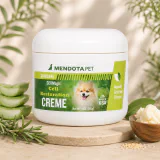 Start the treatment
DERMagic Cell Restoration Crème
Shop on dermagic.eu →
Start the treatment
DERMagic Cell Restoration Crème
Shop on dermagic.eu →Where to start
If your Pomeranian’s skin is turning dark and the coat is going:
- Get the bloodwork done. Rule out thyroid, adrenal and mites first.
- Don’t clip. Brush the dead undercoat out instead.
- Start the topical protocol — bath, then Skin Rescue Lotion to skin twice daily, t-shirt on.
- Give it three months before you judge it, and six before you judge the coat.
Different breed? Our French Bulldog skin guide covers folds, tail pockets and dilute-coat hair loss, and the Golden Retriever guide covers hot spots under a heavy coat.
Not sure whether what you’re looking at is Alopecia X, puppy uglies, or something that needs a vet today? Get in touch — tell us your Pom’s age, where the loss started and what colour the skin is, and we’ll tell you honestly what we think you’re dealing with.