If you think your dog has an allergy, the only way to manage it is to find the root cause. The three most common dog allergies are food, fleas and environment — here’s how to recognise each, and what to do.
Why the root cause matters
If your dog is itching, breaking out, or losing hair, treating the visible symptom won’t get you very far on its own. The skin keeps reacting until the underlying trigger is identified and reduced.
The three most common allergies in dogs are:
- Food allergies
- Flea allergies
- Environmental allergies
Each presents differently. Each needs a slightly different approach.
1. Food allergies
The main symptoms of food allergies are gas, vomiting and diarrhoea — but the picture often includes a number of other signs:
- Itchy or oozing skin
- Red, irritated eyes
- Nasal discharge
- Coughing or sneezing; sometimes asthma
- Inflamed ears
- Swollen paws
Dogs can develop allergies to food they’ve been fine with for years. Finding the culprit is a process of elimination.
We recommend feeding a well-balanced homemade raw diet as a baseline, then introducing other feeds gradually. Rotating protein sources is a good practice, as is strictly limiting or eliminating grains.
2. Flea allergies
Flea allergy causes dermatitis — but it isn’t the bite itself that does it. It’s the flea’s saliva.
The saliva causes a strong inflammatory reaction in flea-sensitive dogs. Once it starts, the dog itches, the area becomes raw and painful, and the dermatitis can persist long after the fleas themselves have been cleared.
Because it is an allergy rather than bite trauma, the severity tracks the dog’s sensitisation rather than the flea count — which is why a flea-allergic dog can be badly affected while you cannot find a single flea.
The first step is rigorous flea control, and that means a prescription product from your vet; the second is treating the damaged skin so it can heal. Our full account is flea allergy dermatitis in dogs and cats, which covers the prevalence figures, the distribution patterns and the home remedies that do not work.
3. Environmental allergies
Environmental allergies (also called atopy) can be triggered by an almost endless list of things:
- Grasses and pollens
- Mould
- Dust and dust mites
- Household chemicals and cleaning products
- Cigarette smoke
- Artificial fabrics
The timing tells you where to look. Seasonal symptoms usually point to outdoor triggers like pollen or grasses. Year-round symptoms point to something indoors — bedding, fabrics, cleaning products, smoke.
To reduce environmental triggers:
- Keep a clean home — vacuum regularly, wash bedding weekly
- Avoid smoking near your dog
- Use an air purifier in the rooms they spend most time in
- Bathe in an all-natural, paraben-free shampoo like the Dermagic Shampoo Bars rather than a perfumed supermarket product
On that last point, one honest qualification: the reason to prefer a short-ingredient bar for an allergic dog is the fragrance and the dyes, which have a real contact-allergy record, not the parabens — which do not. Our bars are paraben-free and we will keep saying so, but we are no longer going to pretend that is the part doing the work. Parabens and SLS in dog shampoo has the numbers, including which preservatives actually sensitise.
Treating the skin
Once the trigger is being managed, the next job is treating the physical skin damage. Allergic skin is broken skin — and broken skin gets colonised by yeast and bacteria that make the problem worse.
This paragraph used to say the range is “100% natural and gets deep into the skin to kill the yeast that’s taken hold.” Both halves have been withdrawn. The range is not 100% natural — the liquid shampoo and conditioner contain phenoxyethanol, and the conditioner also contains propylene glycol, triethanolamine and a synthetic conditioning agent, all printed on the label. And we do not claim our products kill anything: a shampoo that cleans skin is not an antifungal treatment, and where there is an established infection that is a veterinary diagnosis.
What the range does do is keep the surface clean and support the barrier while it recovers, with a product suited to each kind of complaint — from active hot spots to chronic dry, scaly skin. If a vet has diagnosed a yeast overgrowth, ask them about a chlorhexidine-based shampoo: that is the topical with the strongest evidence behind it in canine dermatology, and it is not something we sell.
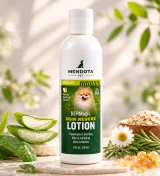 Start the treatment
DERMagic Skin Rescue Lotion
Shop on dermagic.eu →
If you need help selecting the right Dermagic product for your dog, email customerservice@dermagic.eu or call us on +44 7425 388643.